
HIDRAM
CDTI MISIONES-2022 (MIP-2022-1014).
(Oct 2022 to Dec 2024)
The HIDRAM Project has the purpose of building a complete demonstration setup including the key elements for the decarbonization of the maritime transport. Innovate technologies are developed, related to the hydrogen and ammonia value chain and to enhance the R&D capacity of the Spanish industry in this matter, covering the entire production process. The Key Parameters of the HIDRAM Project include:
Ammonia Synthesis, catalyst based with less than 14 kWh/kg NH3 energy consumption (H2 generation included).
PEMFC for maritime use. H2 fuel extracted from ammonia (NH3 cracker and H2 purification with less than 1 ppm of NH3). Combined efficiency greater than 30% (35% optimistic case).
The project includes a complete engineering model for system integration on ships and ports, according to legal normative (IMO and European Rules).
It would be a pioneering demonstrator in Europe for green hydrogen and ammonia as decarbonization fuels for maritime transportation.
Consortium partners: Astilleros de Mallorca, Astilleros F. Cardama, ATD, JALVASUB Engineering, VENTOR Innovations and SOERMAR, with scientific collaborators: ICV-CSIC, UNED and Fundación CIUDAUT
For more information, see the following link:
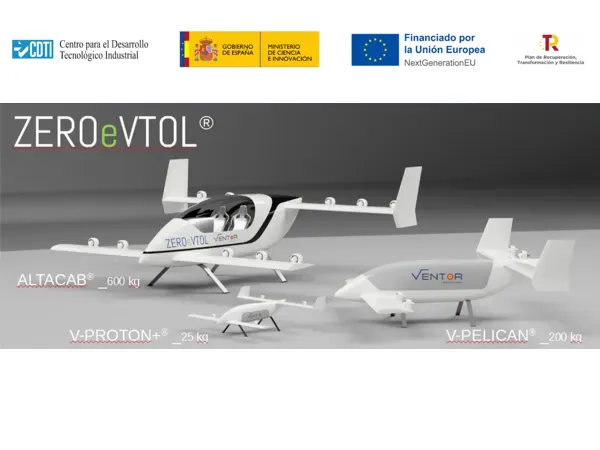
ZEROeVTOL
PROGRAMA TECNOLOGICO AERONAUTICO 2022. PTAP-20221017
(Oct 2022 to Dec 2024)
This project has as target to design and to build two unmanned aircraft (UAV or drone, as they are commonly known) propelled by a Fuel Cell powered by H2. In this way, work will be carried out on two lines of innovation within the framework of the PTA: a new type of convertible aircraft, which takes off and lands vertically, like a helicopter, and has wings for cruise flights, like an airplane; and a propulsion system without carbon dioxide emissions or other gases harmful to the environment. In addition, an experimental direct ammonia SOFC-H was developed to evaluate H2 and NH3 as fuel for Fuel Cells considering issues and advantages for both cases.
Consortium partners: SOLUTE, VENTOR Innovations, JALVASUB Engineering, and ATD with scientific collaborators: ICV-CSIC, UNED and Fundación CIUDAUT.

ALTERA
CDTI MISIONES-2020 (MIP-2020-1003).
(oct-2020 to jun-2023)
Storage of electrical energy as thermal energy.
Electrical energy is transformed into thermal energy through microwaves using special absorbing materials such as silicon carbide, reaching a temperature of 1414ºC corresponding to the fusion of silicon. The thermal energy is confined through mirrors with very high reflectance throughout the infrared spectrum (more than 99.9%). This fact allows this thermal energy to be available during 10 to 100 hours with very low losses. By means of thermo-photovoltaic cells (TPV) it is possible to convert the energy radiated by the hot spot into electricity again, so the system acts as a battery with very high capacity, long life and low losses.
Electrical energy is transformed into thermal energy by microwaves using SiC susceptors designed to contain fused Si.
Consortium partners: ESTEYCO, SILBAT, GFM, NANO4ENERGY and ATD. with scientific collaborators: ICV-CSIC and IES-ETSIT (UPM).
SSTEC
CDTI IDI-20171255
(2017 to 2018)
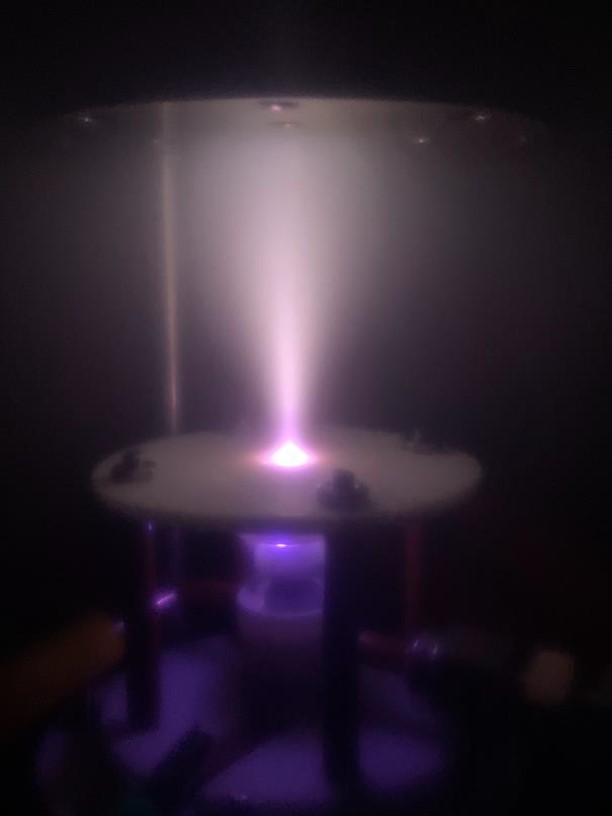
Development of the first thermionic emission devices based on C12A7:e– material (electride) that will lead to aerospace applications such as neutralizers for ionic thrusters, used in further European projects (NEMESIS) and other applications (E.T.PACK).

THERMIONICS
Advanced Thermo-ionic Emission Devices
CDTI IDI-20151237
(2015 to 2016)
Start of the synthesis and successful production of the C12A7:e– material (electride) as a very low work function material for electron emission by means of thermal energy.